
Are you thinking about creating pottery? That’s awesome! Let’s talk about the three main handbuilding techniques you’ll learn when you start working with clay. At Abu Dhabi Pottery, the UAE’s first-ever modern pottery studio, students discover that handbuilding is actually the oldest way people have created pottery. It’s been around for thousands of years, way before anyone invented the pottery wheel.
What’s really cool is that you don’t need fancy equipment to get started. Your hands and a few simple tools are all it takes.
The Three Techniques That’ll Get You Started with Pottery
Pinch Pots
This one’s probably the first technique you’ll try in Abu Dhabi pottery classes. You’ll start with a ball of clay, press your thumb into the center, and pinch the walls out as you spin it slowly in your hand. It’s that simple! This technique helps you get comfortable with how clay feels and moves.
Slab Building
After you feel confident with pinching, you’ll move on to slab building. This technique uses flat sheets of clay that you’ll cut and join together. Think of it like working with fabric patterns. You’ll roll out your clay, cut it to size, and connect the pieces using a method called “score and slip.” Scoring means scratching marks on both edges, and slip acts like glue to hold everything together.
Coiling
You’ll learn coiling next. You’ll roll out long snake-like pieces of clay and stack them to create bigger forms. The size can be anything you want, from tiny bowls to larger vases. Many students also combine pinching and coiling by creating a pinch pot base first, then building up with coils.
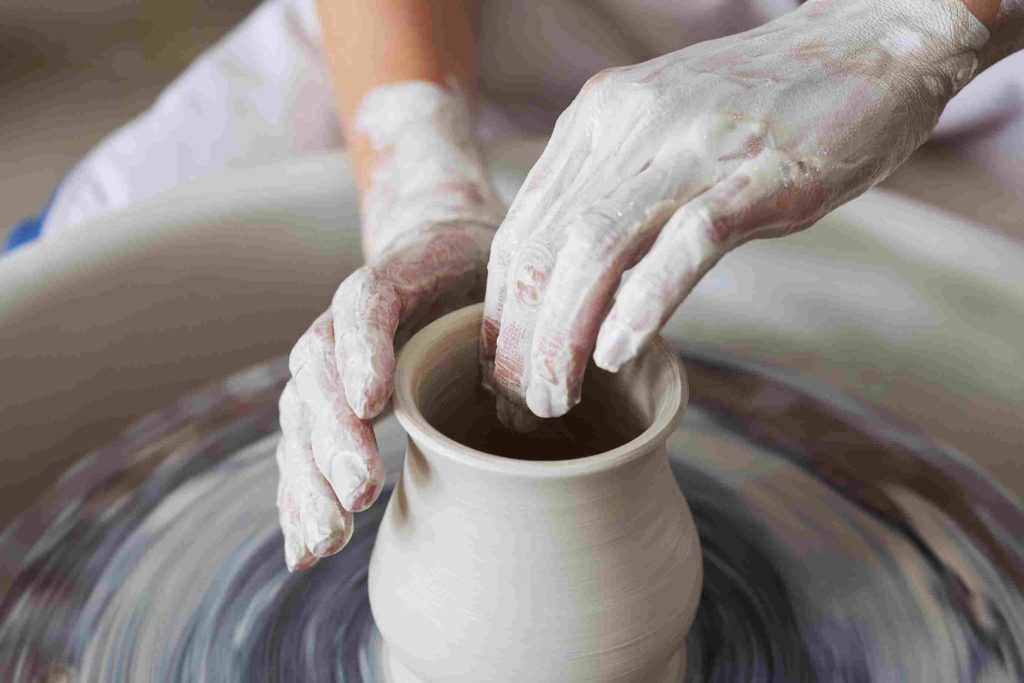
After students feel confident with all three handbuilding techniques, we then introduce them to the pottery wheel.
What Happens After You Create Your Piece?
After you’ve shaped your pottery, it’ll need to dry slowly. Then your piece will be fired in a kiln, which is like an oven for pottery.
Master Potter Homa Farley have designed the most professional pottery classes in Abu Dhabi, where students learn all these techniques step by step.
She is an award-winning Master Potter who’s been recently named one of the noted 69 Glasgow School of Art Alumni. Her art pieces are on permanent exhibit in three museums. While Master Potter Homa Farley and other skilled pottery teachers at Abu Dhabi Pottery studio guide young kids above 5 years of age, adults, individuals, and groups.
Abu Dhabi Pottery has been honored as one of the UAE’s official Urban Treasures by the Department of Culture and Tourism – Abu Dhabi. That’s pretty special!
The best part about handbuilding? Once you’ve learned these three techniques, you can try creating other simple shapes and objects. It’s all about practice and getting your hands in the clay.

FAQs
What’s the easiest pottery technique to start with?
Pinch pots are the easiest way to begin. You’ll get comfortable with clay quickly because you’re just using your hands to shape a simple pot.
Do I need to wedge my clay first?
Yes, you’ll need to wedge your clay before you start. Wedging removes air bubbles and makes the clay easier to work with.
Can I learn all three handbuilding techniques as a beginner?
Absolutely! Our Abu Dhabi pottery classes teach you all three methods. You’ll start with pinching, then move to slab building, and learn coiling before trying the pottery wheel.

Homa was born in Tehran, Iran where she spent her childhood and teenage years. She has lived in the UK, and currently resides between Spain and the United Arab Emirates.


